
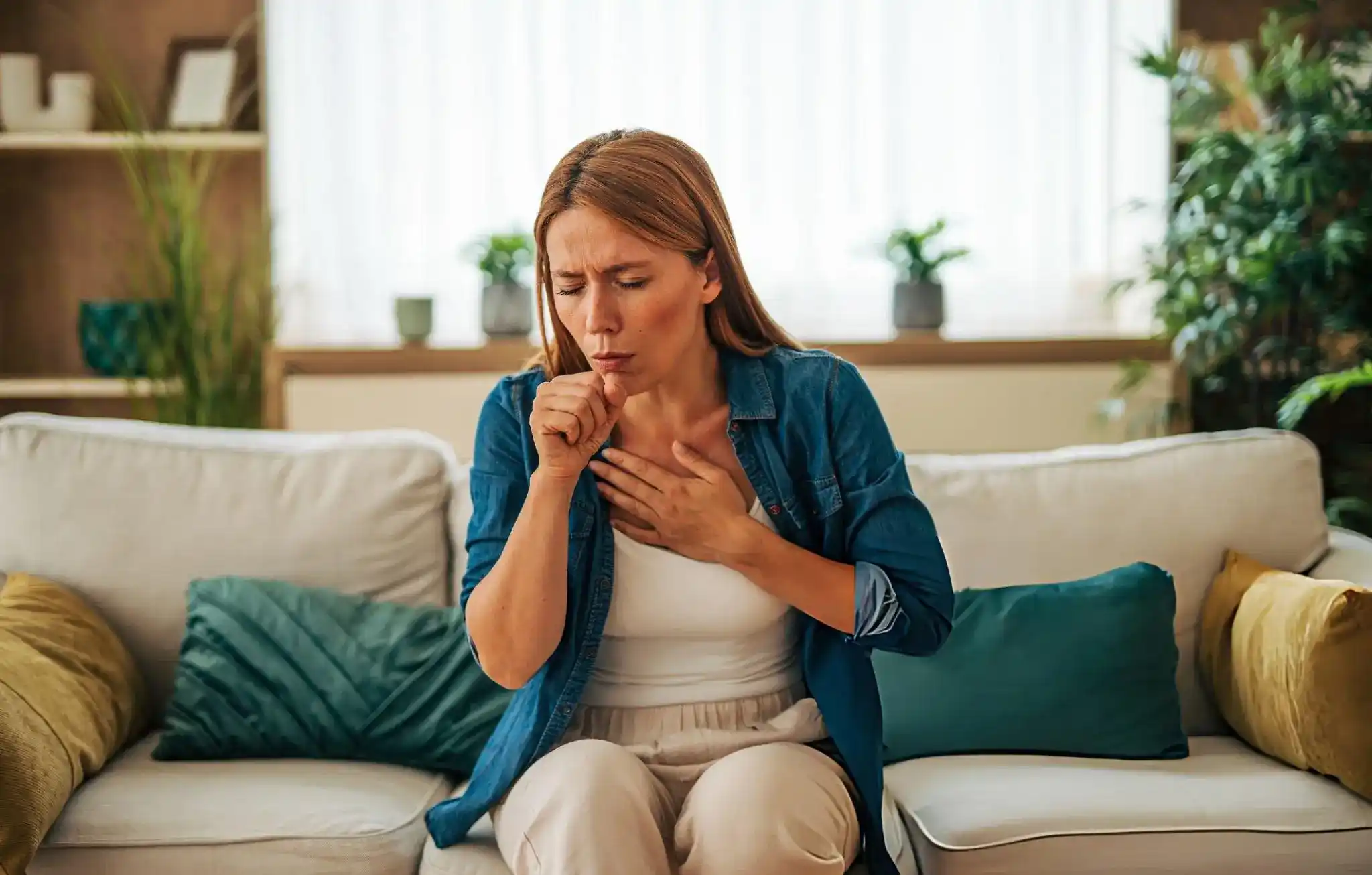
Spirometry is a lung-function test that measures how much air you can forcefully breathe out and how quickly you can exhale it. A GP may recommend it for a persistent cough, wheeze or breathlessness, or when conditions such as asthma or COPD are being investigated or monitored.
Results must be interpreted alongside symptoms, medical history, test quality and clinical assessment. Spirometry is not used in isolation to make a definitive diagnosis.
Key Takeaways
- Spirometry measures airflow and the volume of air forcibly exhaled
- FEV1, FVC and the FEV1/FVC ratio are the main measurements
- Several attempts are usually needed for reliable results
- Some tests are repeated after a bronchodilator
- Results are interpreted alongside symptoms, history and clinical findings
What Is a Spirometry Test and Why Is It Done?
Spirometry may be recommended when a GP wants to assess airflow and breathing capacity as part of a broader clinical review. For more background on how lung-function testing works, Lung Foundation Australia explains how lung function tests work and emphasises that results must be considered with symptoms and medical history.
A GP may recommend spirometry to:
- Investigate persistent cough, wheeze or breathlessness
- Assess suspected airflow limitation
- Support the assessment of asthma or COPD
- Monitor certain established respiratory conditions
- Assess lung function as part of a workplace medical assessment or occupational health evaluation
How Should You Prepare for a Spirometry Test?
Preparation can affect the quality of results. You may be asked to:
- Avoid vigorous exercise shortly before testing
- Follow the clinic’s instructions about smoking or vaping before the test
- Avoid a heavy meal immediately beforehand
- Wear clothing that does not restrict breathing
- Tell the clinic about any inhalers or respiratory medicines you use
Whether respiratory medication needs to be withheld depends on the clinical purpose of the test. Do not stop an inhaler or other respiratory medicine unless your healthcare professional has specifically told you to do so.
Also let the clinic know if you have a current respiratory infection, recent surgery or another significant recent health event, as testing may sometimes need to be postponed.
What Happens During a Spirometry Test?
Understanding the steps can make the appointment feel straightforward. A typical spirometry test involves four stages.
- Preparation: Height and relevant health information may be recorded because reference values are used when interpreting results.
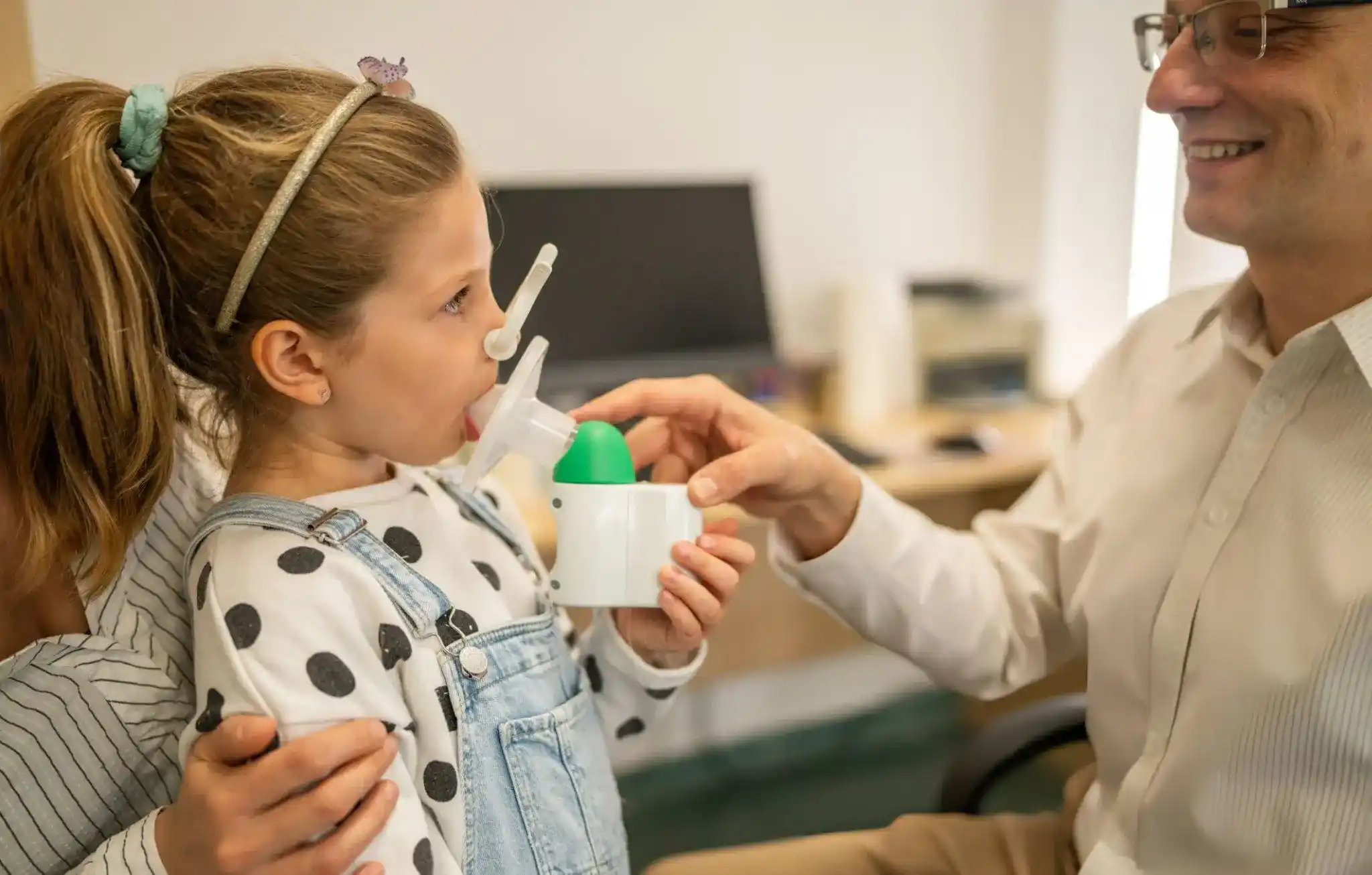
- Position and mouthpiece: You will generally be seated upright, breathe through a mouthpiece and may wear a nose clip to ensure all air passes through the device.
- Full breath and forceful blow: Take a deep breath in, then blow out as hard and as completely as possible until your lungs feel empty.
- Repeat the manoeuvre. The effort is repeated several times. The manoeuvre is repeated several times. Australian standards recommend aiming for at least three acceptable efforts, with repeatability checked to help ensure reliable measurements.
Repeated attempts are a normal part of spirometry and help the operator check that the measurements are reliable.
What Do FEV1, FVC and the FEV1/FVC Ratio Mean?
These are the three core measurements recorded during a spirometry test.
| Measurement | Patient-friendly meaning |
| FEV1 | How much air you can forcefully breathe out in the first second |
| FVC | The total amount of air you can forcefully breathe out after a full breath in |
| FEV1/FVC ratio | Compares those two measurements and helps assess whether airflow may be obstructed |
There is no single universal normal spirometry number for everyone. Results are compared with appropriate reference values, including lower limits of normal and z-scores, while factors such as age, height and other relevant demographic information are considered.
Do not use these numbers to interpret your own result without clinical guidance.
What Can Spirometry Results Show?
Spirometry results can show different patterns that help guide clinical assessment. Two commonly discussed abnormal patterns are obstructive airflow limitation and a possible restrictive pattern.
Obstructive airflow pattern: A reduced FEV1/FVC ratio can indicate expiratory airflow obstruction. This pattern may occur with conditions such as asthma or COPD, but it does not identify the cause on its own.
Possible restrictive pattern: A low FVC with a preserved ratio may raise the possibility of reduced lung volume. However, spirometry alone cannot confirm restrictive lung disease. Full lung-volume testing may be required to establish that finding.
Spirometry patterns provide useful clinical information. They are not used in isolation to make a definitive diagnosis.
Why Is Spirometry Sometimes Repeated After an Inhaler?
Some patients are given a bronchodilator medicine and then asked to repeat the breathing manoeuvre. This allows clinicians to compare measurements before and after the bronchodilator is given.
Current Australian standards recommend considering bronchodilator responsiveness testing when asthma or another obstructive condition is suspected. The response contributes to clinical interpretation and is considered alongside symptoms, examination and other findings. A change in measurements after the bronchodilator does not automatically confirm a specific diagnosis.
Can Spirometry Diagnose Asthma or COPD on Its Own?
Not on its own in every situation. Spirometry is central to investigating suspected asthma and is required to confirm persistent airflow obstruction in COPD, but results still need clinical interpretation.
The Australian Asthma Handbook specifically notes that normal spirometry does not exclude asthma, particularly when a patient has no symptoms at the time of testing. If breathing symptoms continue after a normal result, a GP may consider the timing of the test, your clinical history or whether another assessment is appropriate.
What Happens After a Spirometry Test?
A GP may review the numerical measurements alongside test quality, symptoms, medical history, smoking or occupational exposure history, and any previous results. Further testing, monitoring or referral may be recommended depending on the findings.
If you have an ongoing cough, wheeze or breathlessness, a GP assessment for breathing symptoms can help determine whether spirometry or another investigation may be appropriate.
Spirometry Testing in Paterson NSW
Paterson Healthcare provides spirometry testing where clinically indicated as part of broader respiratory or workplace assessment. If you have persistent breathing symptoms or have been advised to undergo spirometry, a GP can discuss whether the test is appropriate for your circumstances.
To discuss breathing symptoms or whether spirometry is suitable for you, contact Paterson Healthcare to arrange a GP appointment.
FAQs
Does a spirometry test hurt?
Spirometry is generally well tolerated, although repeated forceful breathing may feel tiring or cause temporary light-headedness. The operator can provide rest between attempts if needed.
Can spirometry diagnose asthma?
Spirometry provides important evidence when asthma is being investigated, but results are interpreted alongside symptoms and clinical assessment. Normal spirometry does not necessarily exclude asthma.
Can spirometry show COPD?
Well-performed post-bronchodilator spirometry is used to confirm persistent airflow obstruction when COPD is being diagnosed, alongside symptoms, risk factors and clinical assessment.
Can spirometry be normal even if I still have breathing symptoms?
Yes. This is particularly relevant in asthma, where airflow limitation can vary over time. Normal spirometry does not exclude asthma when the clinical history remains suggestive of the condition.