

Cryotherapy is a medical procedure that uses controlled extreme cold, usually liquid nitrogen, to freeze selected surface skin lesions. It is a common treatment in general practice for certain benign and sun-damaged skin conditions following clinical assessment.
This article covers how skin cryotherapy works, which lesions may be suitable, what the procedure involves, and how to care for the area during healing. It does not cover whole-body cryotherapy or sports recovery treatments.
Key Takeaways
- Cryotherapy usually uses liquid nitrogen to freeze selected skin lesions
- A skin lesion must be assessed before treatment to confirm suitability
- Warts, actinic keratoses and some other surface lesions may be treated
- Stinging, redness, blistering or scabbing can occur during healing
- Worsening pain, spreading redness or delayed healing should be reviewed by a GP
What Is Cryotherapy and How Does It Work?
Skin cryotherapy uses liquid nitrogen to apply controlled extreme cold directly to a lesion. This damages the targeted surface tissue, which then thaws and is gradually cleared as the area heals over time.
The Cancer Council Australia explains that liquid nitrogen may be used for sunspots and selected superficial skin cancers, with method, freeze duration and number of freeze-thaw cycles depending on the lesion type, size, thickness, body location and clinical assessment.
What Skin Lesions May Be Treated With Cryotherapy?
Cryotherapy is used for a range of selected surface skin lesions in general practice. Common examples include:
- Actinic or solar keratoses, also known as sunspots
- Common and plantar warts
- Selected seborrhoeic keratoses
- Some skin tags
- Molluscum contagiosum in selected circumstances
Cryotherapy may be appropriate for certain confirmed superficial lesions, but this list does not mean every patient or lesion qualifies. Suitability depends on diagnosis, lesion location, skin type, and whether tissue pathology may be needed. A skin lesion and skin cancer check is the appropriate starting point for understanding which option may suit your situation.
Why Must a Skin Lesion Be Assessed Before Freezing?
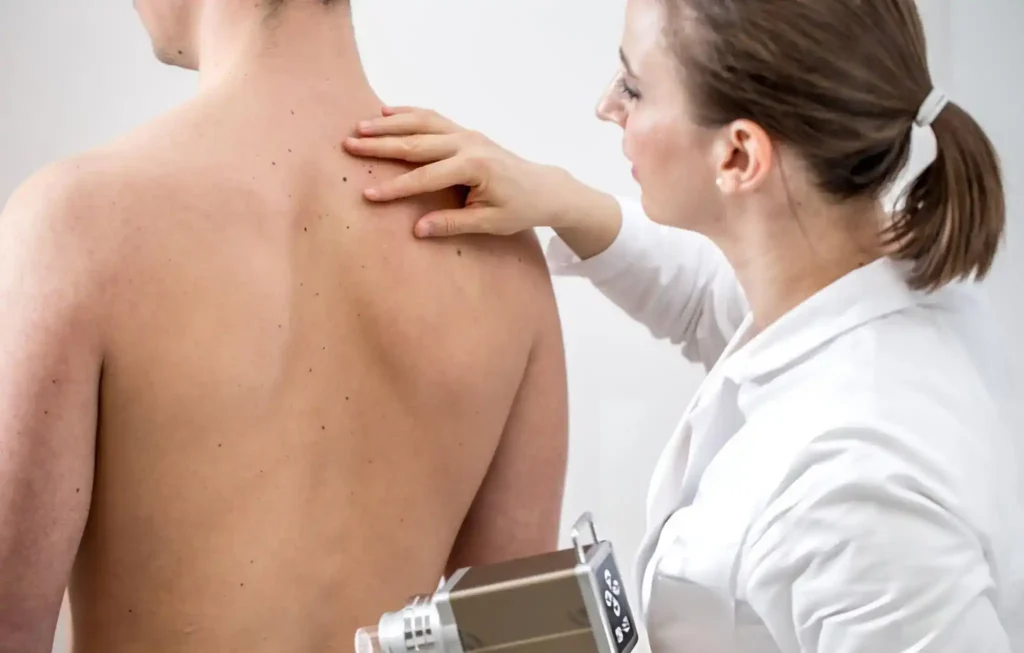
Cryotherapy destroys the treated tissue and does not provide a specimen for laboratory analysis. This is why a clinical assessment must come before treatment.
A GP can determine whether:
- The lesion appears benign and suitable for freezing
- Dermoscopy or closer examination is needed
- A biopsy or excision would provide a more reliable tissue diagnosis
- Monitoring over time is more appropriate
- Referral to a dermatologist or specialist is warranted
The RACGP advises against treating unidentified lesions without adequate assessment and discourages freezing when the diagnosis is uncertain.
If you have a persistent, unidentified or changing skin lesion, a GP can examine it and discuss whether cryotherapy, monitoring, biopsy or another step may be appropriate.
What Happens During a Cryotherapy Procedure?
Understanding what to expect can make the appointment less stressful. A typical skin cryotherapy procedure involves four steps.
- Lesion assessment: The doctor examines the lesion and confirms whether freezing is the most appropriate approach.
- Skin preparation: The treatment area is identified and prepared where required.
- Liquid nitrogen application: Liquid nitrogen is sprayed or applied directly to the lesion for a controlled period. Some lesions may require more than one freeze-thaw cycle.
- Thawing and review: The area is allowed to thaw. The doctor will advise whether a further session may be needed depending on the lesion’s response.
Patients may feel brief burning, stinging or aching during freezing and during thawing. The sensation varies according to the lesion, body area and treatment depth.
What Should You Expect After Cryotherapy?
Normal Changes During Healing
The treated area may go through several visible changes as it heals. These can include:
- Soreness or tenderness in the hours after treatment
- Redness and swelling around the treated site
- A clear or blood-filled blister forming within one to two days
- Crusting or scabbing as the tissue heals
- A lighter or darker skin area once healing is complete
Healing may take several days to a few weeks. Body areas with slower circulation, such as the lower legs, can take considerably longer to heal than facial areas.
Cryotherapy Aftercare
Follow your doctor’s specific aftercare advice, as guidance can differ depending on the lesion type, treatment depth and body site. General principles include:
- Gently clean the area as directed by your GP
- Use a dressing if clothing rubs against the site or if you have been advised to
- Do not pick at the scab or deliberately remove it
- Do not pop a blister unless specifically instructed to do so
- Protect healed skin from sun exposure
- Attend any follow-up appointment your GP recommends
Before attending a cryotherapy appointment, it is helpful to review the practice’s fees and billing information or ask reception about service availability and any procedure costs that may apply.
When Should You Contact a GP After Cryotherapy?
Most changes after cryotherapy are part of the expected healing process. However, some changes suggest the area should be reviewed. Contact your GP if you notice:
- Pain or swelling that is worsening rather than settling
- Redness spreading beyond the treated area
- Pus, thick yellow discharge, or an unpleasant odour
- Persistent or unexplained bleeding
- Fever or feeling generally unwell
- A wound that is not showing any signs of healing
- The original lesion remaining, returning, or continuing to change
- Any new concern about the treated site
Infection may present with increasing pain, warmth, spreading redness and discharge. A lesion that persists or returns after treatment may need further assessment or a different management approach.
FAQs
Does cryotherapy hurt?
Cryotherapy can cause brief burning, stinging or aching during freezing and thawing. The intensity varies depending on the lesion, body area and depth of treatment.
Is blistering normal after liquid nitrogen treatment?
A clear or blood-filled blister can occur and may be part of the expected healing response. Follow your GP’s aftercare instructions and arrange a review if pain, redness or discharge worsens.
How long does cryotherapy take to heal?
Healing may take several days to a few weeks, depending on the treatment depth and body site. Areas such as the lower legs may take longer than facial areas.
Can any mole or skin lesion be frozen?
No. An unidentified or suspicious lesion must be assessed first. Biopsy, excision, monitoring or specialist referral may be more appropriate when a tissue diagnosis is needed.
Can a skin lesion return after cryotherapy?
Yes. Some lesions persist or return, and certain conditions may require more than one treatment session. A GP should review any lesion that remains unchanged or continues to change after healing.
Resources and References
- RACGP — Optimising Cryosurgery Technique https://www.racgp.org.au/afp/2017/may/optimising-cryosurgery-technique
- Cancer Council Australia — Other Treatments for Skin Cancer https://www.cancer.org.au/types-of-cancer/skin-cancer/treatment-for-skin-cancers/other-treatments-for-skin-cancer
- DermNet — Cryotherapy: Uses, Cautions and Aftercare https://dermnetnz.org/topics/cryotherapy
- Healthdirect Australia — Skin Tags and Treatment Options https://www.healthdirect.gov.au/skin-tags
This article provides general health information only and does not replace individual medical advice. Cryotherapy suitability, treatment technique, aftercare and healing depend on the lesion, body site, medical history and clinical assessment. Please speak with your GP before proceeding with any skin treatment.